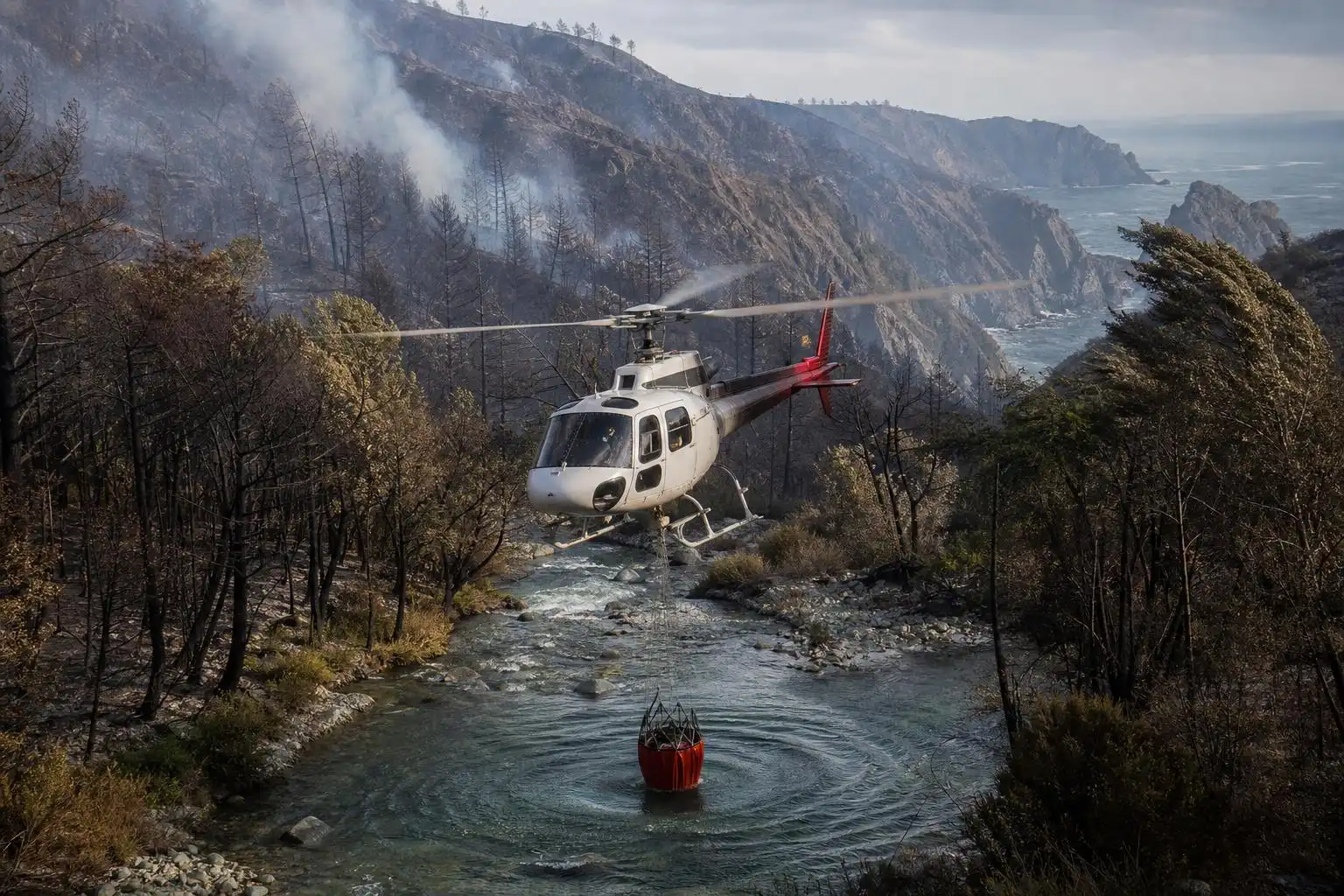

I’ve spent three weeks reading dispatches from four continents and they all rhyme. A helicopter dips a bucket into Willow Creek to fight the Plaskett Fire near Big Sur.[1] A rusted steam tugboat surfaces from the Sava River in Serbia because there isn’t enough water left to hide it.[5] Residents in Palembang gather in a courtyard to perform a prayer for rain because the smoke from Sumatra’s peatland fires has made it hard to see across the street.[4] These are separate events with a common theme. They show fire in one place and empty riverbed in another, with infrastructure under pressure in both directions at once.
Water Stress, Wearing Different Costumes
Start with Europe, where major wildfires coincided with drought and record-low river levels. Belgium is fighting one of its largest wildfires ever, pushing toward the German border even as rain finally arrives to help crews.[2] In Greece, a blaze on the island of Salamina killed two people and injured nine more before investigators started picking through the wreckage of homes.[2] At the same time, a few hundred miles east, the Danube has dropped so low near Nagymaros that people are walking on exposed sandbanks instead of boating over them.[3]
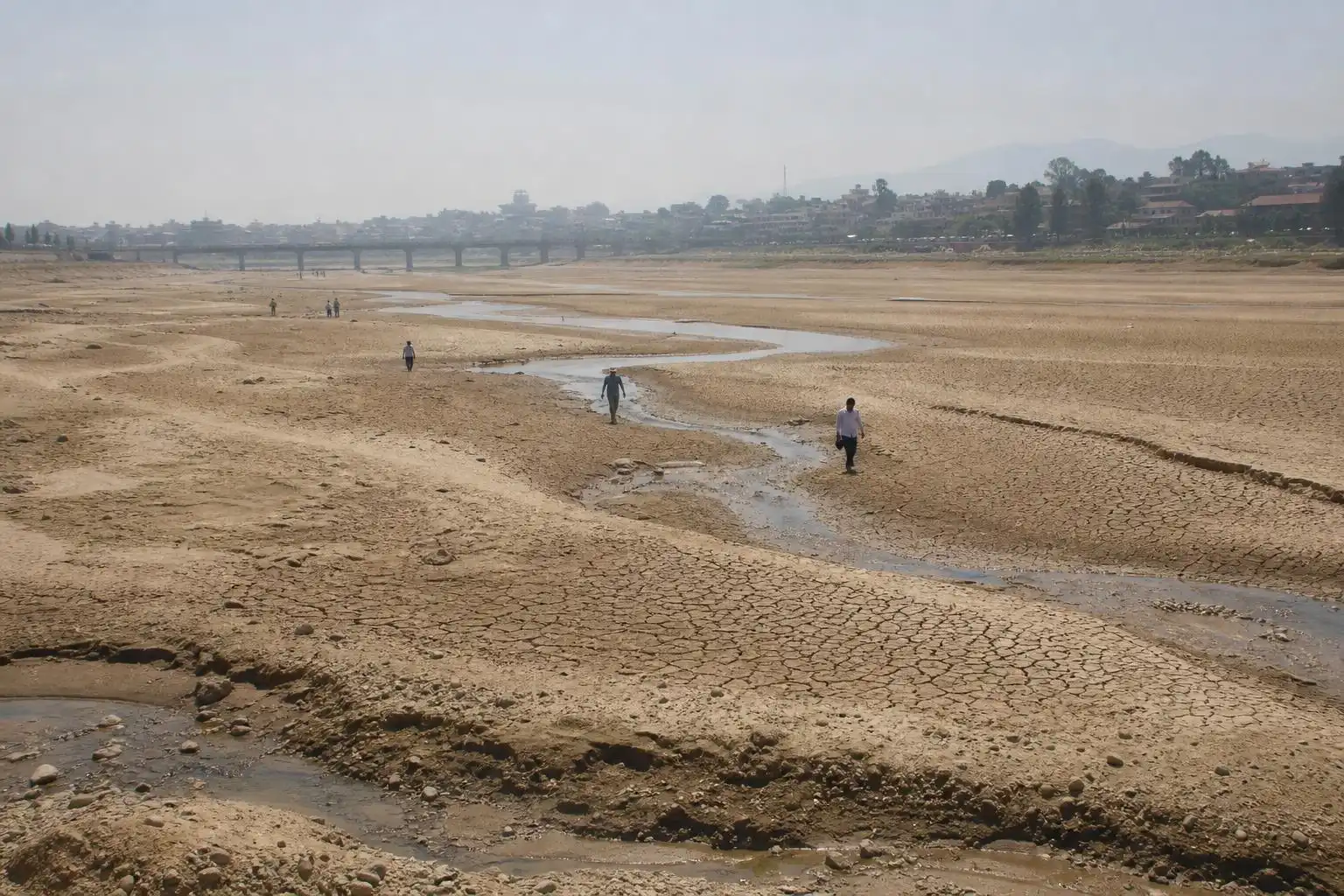
Hungary’s drought exposure isn’t just bad luck. The country built more than 40,000 kilometers of drainage canals — longer than the Earth’s circumference — specifically to move water off the land and out to sea as fast as possible, because a century ago the problem was too much water, not too little.[3] Now that same engineering, still doing its job, is draining away exactly the moisture the soil and rivers need to survive a hotter, drier climate. Officials there are talking about shifting from drainage to retention, which is the right call, but retrofitting 25,000 miles of canals is not a permitting cycle. It’s a generational undertaking, and it should have started twenty years ago.
The Fire Season That Won’t Follow a Calendar
I wrote last month about the gap between wildfire planning and wildfire doing, and this cycle of stories confirms the gap is now global, not just American. California is dealing with two fires burning along the Big Sur coast, driven by an unusual late-August combination of lightning risk and gusty winds pulled off the remnants of a Pacific tropical storm.[1] That’s not the classic dry-lightning pattern crews train for in July; it’s a hybrid threat, with tropical-storm remnants raising lightning and wind risks across a fire-prone landscape. Crews at the U.S. Forest Service station near Big Sur were literally trimming brush against their own building to keep it defensible while the Plaskett Fire closed in.[1] That’s fuel treatment happening in real time, under fire, which is the worst possible moment to be doing it and also, too often, the only moment anyone gets around to it.
Indonesia’s peatland fires in Sumatra and Kalimantan are the starkest example of what happens when land-use decisions from decades past collide with a drought year. Peat fires don’t behave like forest fires — they smolder underground, resist rain, and choke cities for weeks. When the haze got bad enough that drivers in Palembang needed headlights at midday, authorities turned to salat istisqa, an Islamic prayer for rain, with about 3,000 people gathering in front of the governor’s office.[4] I don’t say that to diminish it — when the mechanical tools run out, prayer is a rational response to an irrational situation. But it’s also a signal of how difficult widespread peatland fires are to control during a bad dry season.
The Colorado River Problem Has a Timer On It
The American West’s version of this story doesn’t involve smoke, but it’s arguably more consequential because it’s about permanent legal entitlements to a shrinking resource. Nevada sued the Interior Department and the Bureau of Reclamation this month, arguing that planned cuts to its Colorado River allocation — up to 70 percent over the next decade — would leave the Las Vegas region unable to meet basic needs.[6] One water manager summed up the feeling better than I could: you can see the shortage coming, but you can’t get out of the way, and you don’t know what the damage will be until it lands.[6]
That lawsuit is a preview of what every over-allocated basin in the world is going to go through this century: a negotiated framework built for average conditions meeting a hydrology that no longer produces average conditions. Cities and farmers are both suing and lobbying because the alternative — actually cutting demand to match supply — is politically brutal. Somebody has to lose water rights they’ve held for a century, and nobody with standing wants to volunteer.
Even infrastructure meant to serve visitors rather than farms is buckling. Flash flooding over the weekend badly damaged the single pipeline that supplies water to the Grand Canyon, a line already in the middle of a multi-year upgrade project in terrain so rugged that helicopters are needed for basic repairs.[7] Officials had to close off water sources for millions of annual visitors. It’s a small system in the scheme of things, but it’s a clean illustration of a bigger pattern: aging single-point infrastructure, upgraded too slowly, meeting flash flooding capable of badly damaging the only water pipeline.
Extremes Don’t Wait for the Right Season
The Northeast got its own reminder that resilience planning can’t be organized around a tidy list of hazards. Tornadoes touched down in Delaware’s capital and on New York’s Long Island during storms that also dumped heavy rain and flash-flooded roads, stranding people in their cars in Jersey City.[8] Storm response crews there were dealing with downed trees and flooded streets in the same 24-hour window, the kind of compound event that emergency managers used to treat as a low-probability edge case in their plans.
And half a world away, catastrophic flooding in Nepal and Tibet has killed more than 390 people, with over 1,400 still missing, a scale of loss that dwarfs everything else in this roundup and is a blunt reminder that while rich countries litigate river allocations and build cooling infrastructure, the deadliest failures are still happening in places with the least capacity to absorb them.[1]
What Actually Needs to Change
None of this is mysterious anymore, which is what makes it frustrating. Hungary knows it needs to retain water instead of draining it, but that requires rebuilding infrastructure at a scale few governments have ever attempted outside of wartime.[3] The Colorado River basin knows its allocations were written for a wetter climate than the one it has now, but renegotiating water law means asking someone powerful to accept less.[6] Wildfire agencies from California to Indonesia know fuel and peat management has to happen in the off-season, not while the fire is already at the fence line, but funding for prevention rarely survives contact with a budget cycle the way funding for suppression does.
The pattern across every one of these stories is the same: the fix was identifiable years in advance, the fix was expensive and politically costly, and the fix got deferred until the deferred cost showed up as a burned neighborhood, a stranded family, or a lawsuit over a river that no longer carries enough water to satisfy everyone who has a legal claim on it. Adaptation isn’t a technology problem at this point. It’s a sequencing problem — getting the unglamorous, expensive work done in the calm years so the emergency years are merely bad instead of catastrophic. This summer, in basin after basin, we ran out of calm years before we finished the work.


Leave a Reply