
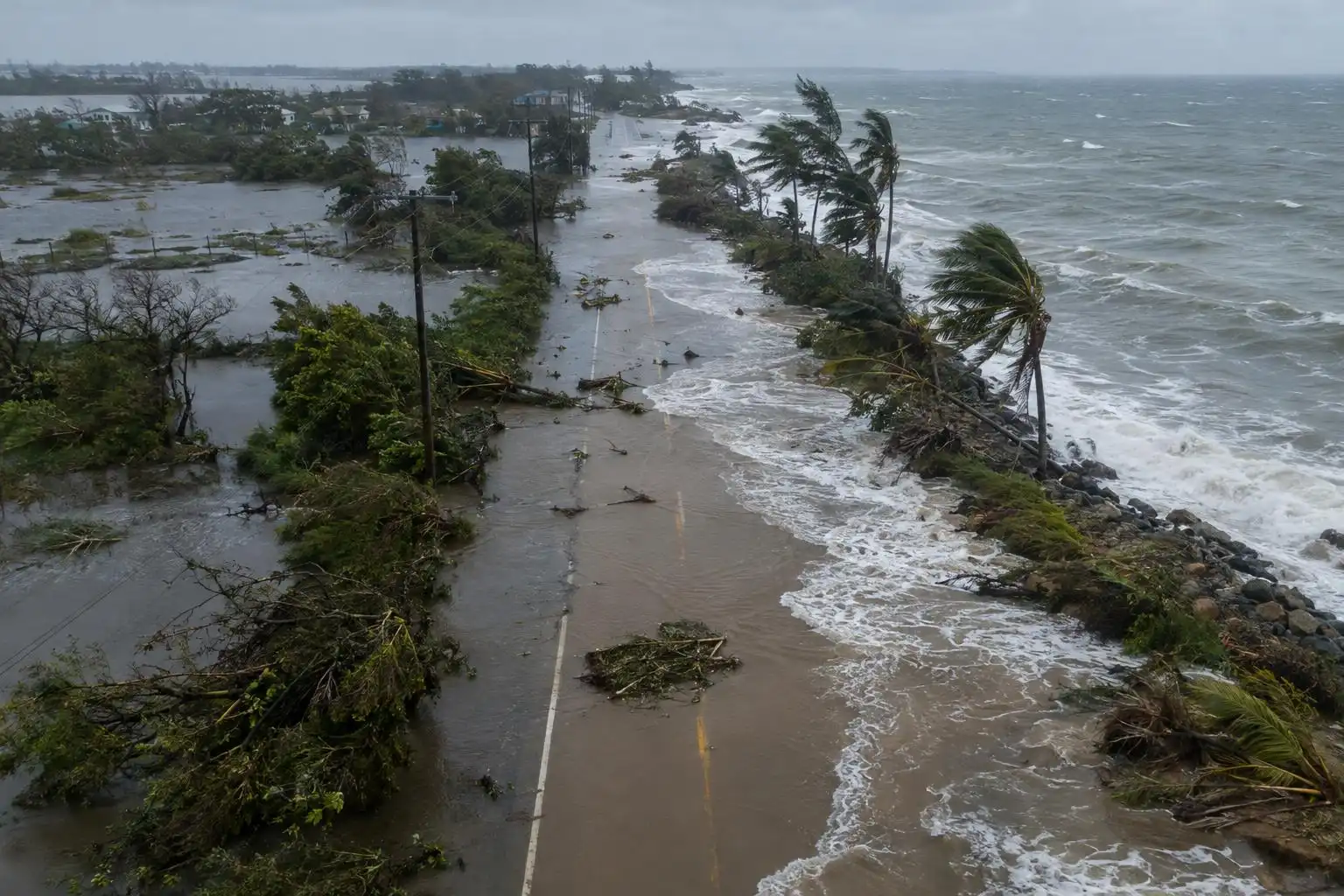

A hurricane weakens before landfall, yet its rain still floods roads. A typhoon strikes a country with extensive warning systems, yet landslides still kill people. After both disasters, the question is understandable: how much did climate change contribute? The answer depends on what, exactly, we are trying to measure.
Two storms, several different questions
Hurricane Polo brought flooding, fallen trees and infrastructure damage to parts of Mexico in September 2026. Its remnants also produced flooding in parts of the United States. In Mexico, the reported consequences varied sharply by location: the World Weather Attribution account noted no recorded fatalities in Baja California Sur at the time of reporting, but deaths associated with flooding in Jalisco and Sonora.[1]
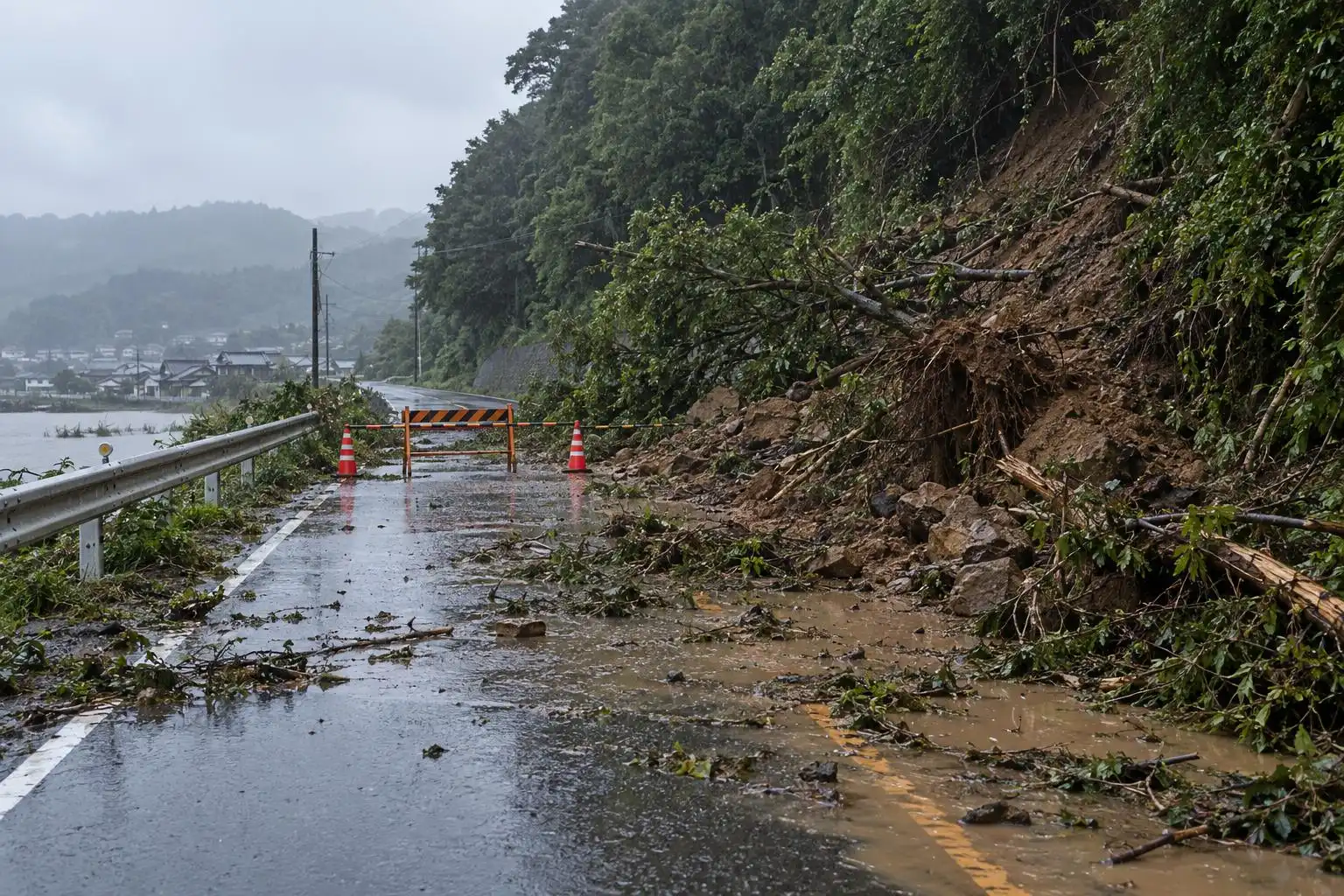
Days earlier, Typhoon Dujuan had brought torrential rain, flooding and landslides to Japan’s Kantō region. Roads flooded or collapsed, embankments around Lake Inbanuma were breached, and nearly 45,000 customer accounts lost electricity across the Tokyo Electric Power Company’s service area. The World Weather Attribution account reported 17 deaths across affected regions, many associated with landslides.[2]
These are not two interchangeable examples of a “climate-fueled storm.” Polo raises questions about the conditions that supported its strength as well as the rainfall that caused flooding. Dujuan’s toll directs attention to intense rain, unstable slopes and the limits of protection. Each question needs its own evidence.
What attribution studies compare
Event attribution does not ask whether climate change created a particular storm from nothing. It compares the likelihood or intensity of a defined feature of an event in today’s climate with a counterfactual climate without human-caused warming. That feature might be peak wind, rainfall over a specified area and time, or conditions favorable for a storm to intensify.
For Polo, World Weather Attribution concluded that climate change’s effect on strengthening the hurricane was at least as large as El Niño’s. Its account describes analyses of potential intensity in the eastern Pacific—the atmospheric and oceanic conditions that can support a storm’s maximum strength.[1] Potential intensity is not a measurement of Polo’s actual maximum wind. Nor does a finding about strengthening conditions, by itself, quantify climate change’s contribution to every flooded street along the storm’s path.
That distinction matters. El Niño and human-caused warming can both influence a storm’s environment, but they are not competing explanations from which we must choose just one. El Niño varies from year to year; greenhouse-gas-driven warming changes the background against which that variability plays out. A comparison of their effects must name the storm property being compared.
Rain, terrain and exposure
Warmer air can hold more water vapour, giving storms a greater potential to produce heavy rain. But rainfall at a particular town also depends on a storm’s track, speed and structure. Whether that rain becomes a lethal flood depends on drainage, rivers, land use and where people live. A storm-wide statement cannot substitute for an analysis of rainfall at the place and timescale that mattered.
Dujuan illustrates why the chain from weather to harm is especially important. Its rain coincided with flooding, breached embankments and landslides in affected areas of Japan.[2] A rainfall attribution result, if established for a clearly defined area and duration, would tell us about one link in that chain. It would not assign a percentage of each road failure or death to climate change.
The same caution applies to Polo. A coast can escape fatalities while flooding elsewhere proves deadly; remnants can remain hazardous long after winds weaken.[1] Disaster severity is not a simple readout of a hurricane’s wind category.
What preparedness can—and cannot—do
Warnings and preparation may have helped limit casualties in Baja California Sur, according to the World Weather Attribution account of Polo.[1] Dujuan shows the other side of that lesson: even in a well-prepared country, extreme rain can overwhelm particular slopes, roads or flood defenses.[2] Neither outcome proves that preparation is futile, or that it removes the underlying hazard.
Adaptation also has to account for systems that fail together. A recent review of UK transport resilience identifies drainage improvements, track reinforcement and heat-resistant materials among existing responses to extreme weather, while noting the difficulty of planning across assets and regions.[7] A warning is less useful when the road out is flooded or communications are down.
A better question after the next storm
When an attribution result appears, ask what event was defined, what was measured, and what comparison was made. Then ask a separate question: why did that hazard cause the damage it did? For Polo, evidence about strengthening conditions should not be mistaken for an estimate of every flood impact. For Dujuan, the human toll should not be treated as a direct measure of warming.
The measured conclusion is neither “climate change caused everything” nor “weather has always happened.” A warmer climate can alter the odds and intensity of particular hazards. Tracks, terrain, infrastructure and timely decisions determine much of what happens next. Understanding both parts gives us a clearer account of these storms—and a more useful basis for preparing for the next ones.
References
- Effect of climate change at least as large as El Niño in strengthening Hurricane Polo – World Weather Attribution — https://www.worldweatherattribution.org/effect-of-climate-change-at-least-as-large-as-el-nino-in-strengthening-hurricane-polo
- Typhoon Dujuan: in a warming climate even well-prepared nations remain vulnerable to worsening climate extremes – World Weather Attribution — https://www.worldweatherattribution.org/typhoon-dujuan-in-a-warming-climate-even-well-prepared-nations-remain-vulnerable-to-worsening-climate-extremes
- Opportunities and challenges for decarbonised, adaptable and resilient transport systems in the United Kingdom — https://www.nature.com/articles/s44333-026-00131-2


Leave a Reply
You must be logged in to post a comment.