
A storm, drought or heatwave is often described as a single event. People experience something more complicated: rain falling on already saturated ground, heat worsening a water shortage, or a mountain collapse turning into a flood far downstream. Each stage changes what happens next. That makes the question “Was it climate change?” important—but rarely sufficient on its own.
A disaster can change form as it moves
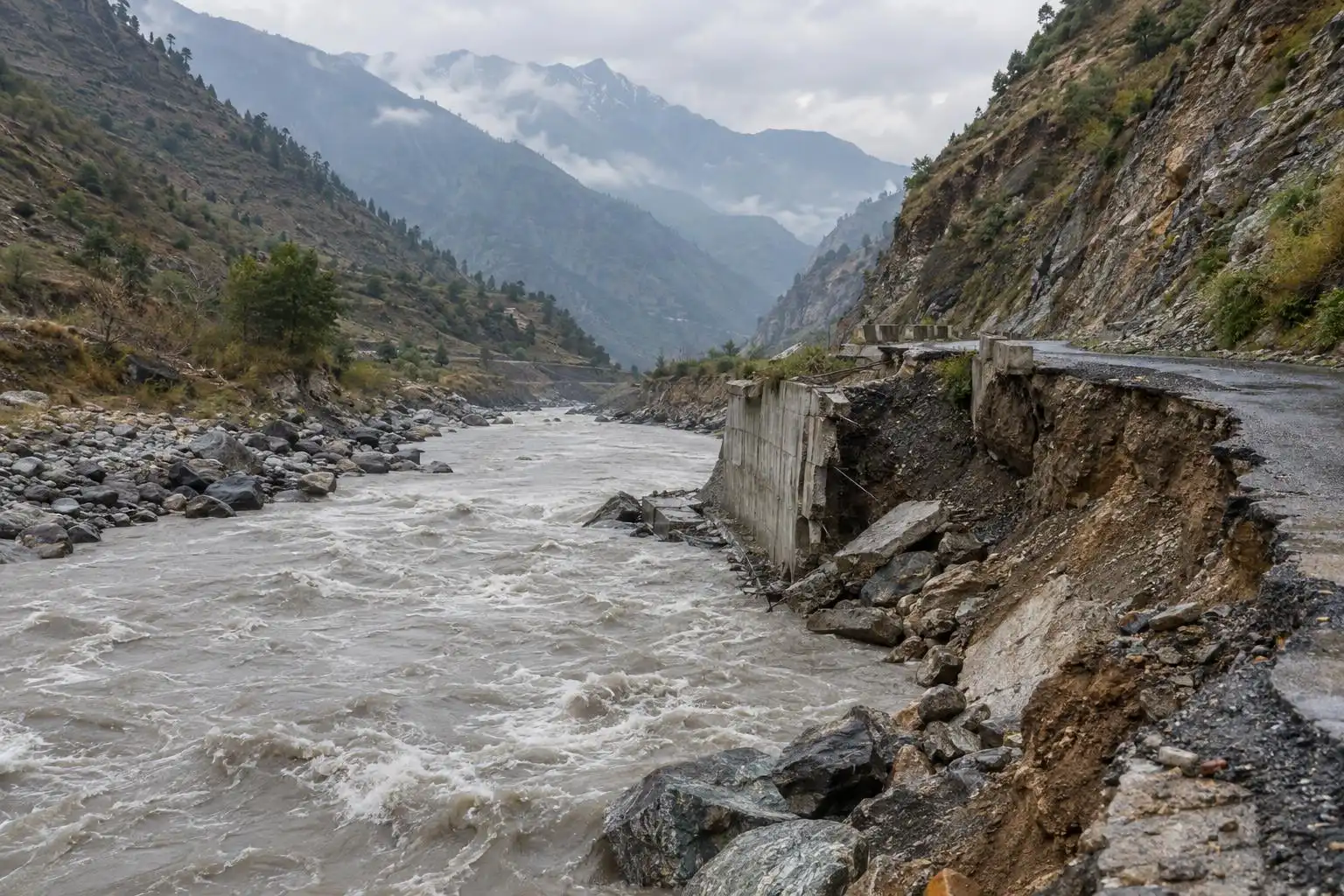
The August 2026 disaster along the Nepal–China border began with a rock-wall collapse that brought down part of a glacier. The rock–ice avalanche became a debris flood and then a water-dominated flash flood. A World Weather Attribution assessment reports that the flow carried sediment and debris through settlements, fields and hydropower infrastructure. As of 14 September, Nepal had recorded more than 1,300 deaths and over 5,000 people missing.[1]
This was not simply a question of whether a warmer atmosphere produced a stronger flood. To assess climate’s role, researchers must examine the links in the chain: mountain conditions before the collapse, the material released, and the speed and path of the flow. The disaster also shows why a hazard map drawn around one type of event may not describe the danger downstream when that event transforms.
Extremes can overlap across a landscape
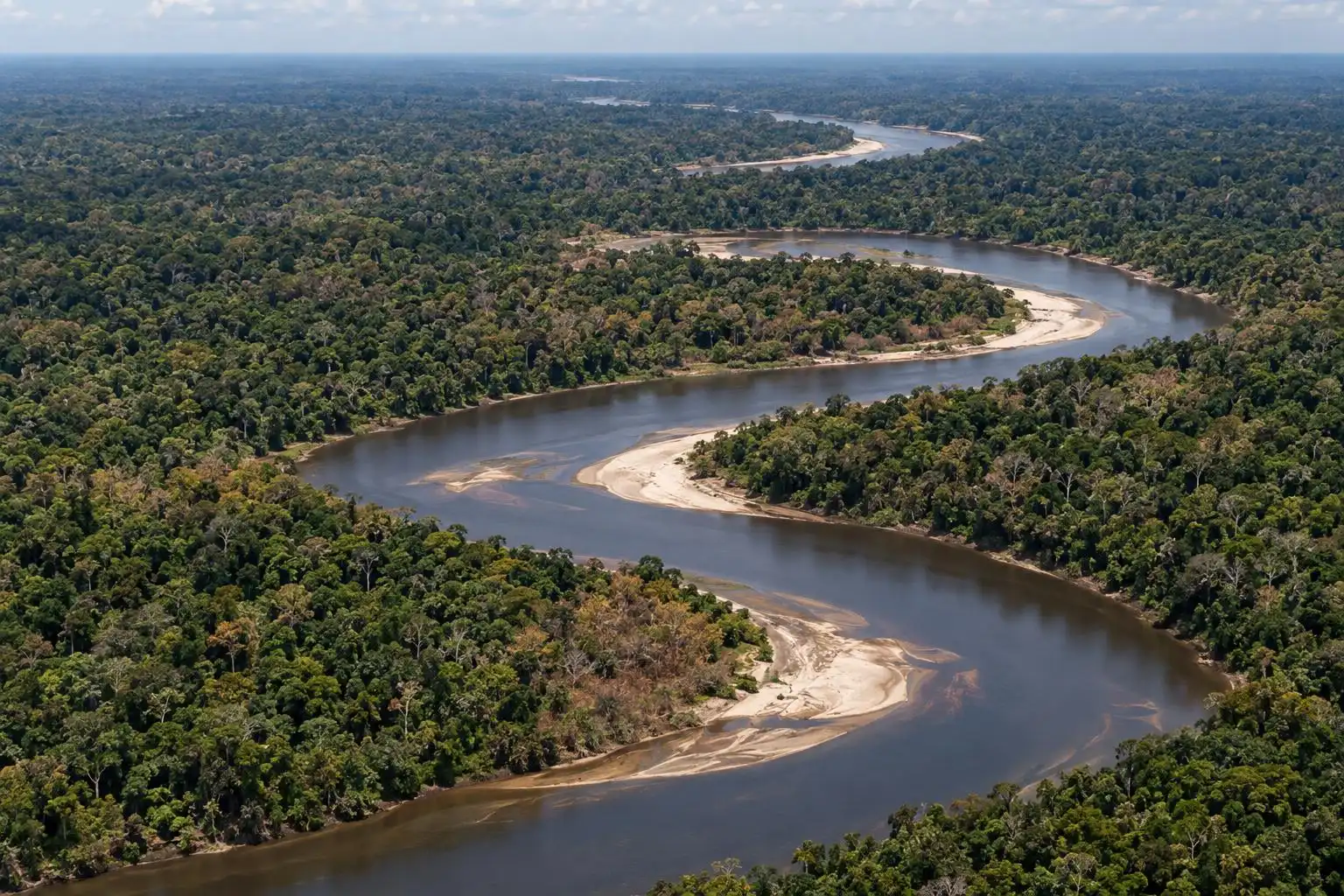
A 2026 study of Amazonia reports a rapid increase in climate extremes and identifies new areas of concern.[2] The implication for risk planning is not that every part of the region faces the same threat. It is that past experience may become a less reliable guide as conditions change, particularly where different stresses reach the same forests and communities.
Scientists call events compound when their combination matters. The events need not peak on the same day. A drought can leave a landscape vulnerable before a heatwave arrives; intense rainfall can strike before homes, roads or farms have recovered from an earlier flood. Measuring each extreme separately can therefore understate the demands placed on people and ecosystems.
Attribution asks a narrower—and useful—question
An attribution study typically compares an event’s likelihood or intensity in today’s climate with an estimated climate without human-caused warming. It does not need to claim that climate change was the only cause. Nor does a finding of increased likelihood tell us, by itself, how many people were harmed. Exposure, infrastructure, warnings and the ability to recover all shape the outcome.
Cascading events make that comparison harder. Researchers may have good evidence for a warming influence on one part of a sequence while lacking enough observations to quantify its contribution to the final disaster. That uncertainty should be stated plainly. It is not evidence that climate played no role; it is a limit on the particular claim the data can support.
Experience changes preparedness, but not uniformly
A recent study of hurricane experiences found that the magnitude and frequency of past storms shape community preparedness in distinct ways. It also emphasizes that hurricanes present different hazards: a slow-moving storm may bring prolonged rainfall, while another’s destructive winds create a different set of problems.[4]
That distinction matters when officials ask whether a community has “been through this before.” Repeated moderate storms do not necessarily prepare it for an extreme one, and surviving a damaging windstorm does not mean residents are ready for prolonged flooding. Preparedness must be matched to the hazards a storm can produce, not just to the number of storms people remember.
People’s responses are part of the risk picture
Research on climate extremes and global net migration describes relationships that are compound and heterogeneous, rather than a single predictable movement of people after bad weather.[5] Some households can move; others may use savings, change livelihoods or remain where they are despite growing risk. A migration figure alone cannot tell us whether staying was a safe choice or the only available one.
For adaptation, the practical question is therefore broader than “What is the probability of this event?” Planners also need to ask what could happen immediately afterward, who is exposed along the entire path of a cascading hazard, and which households have the resources to act on a warning. Climate attribution can clarify how the physical odds are shifting. Reducing losses requires following those shifting risks all the way through to people’s lives.
References
- Rapid Warming in the Himalaya Exacerbates Geohazard Cascades Beyond Adaptation Limits – World Weather Attribution — https://www.worldweatherattribution.org/rapid-warming-in-the-himalaya-exacerbates-geohazard-cascades-beyond-adaptation-limits
- Rapid increase of climate extremes reveals new areas of concern in Amazonia — https://www.nature.com/articles/s43247-026-03975-1
- Magnitude and frequency of hurricane experiences shape community preparedness in distinct ways — https://www.nature.com/articles/s44458-026-00156-1
- Compound and heterogeneous relationships between climate extremes and global net migration — https://www.nature.com/articles/s41558-026-02752-4


Leave a Reply