
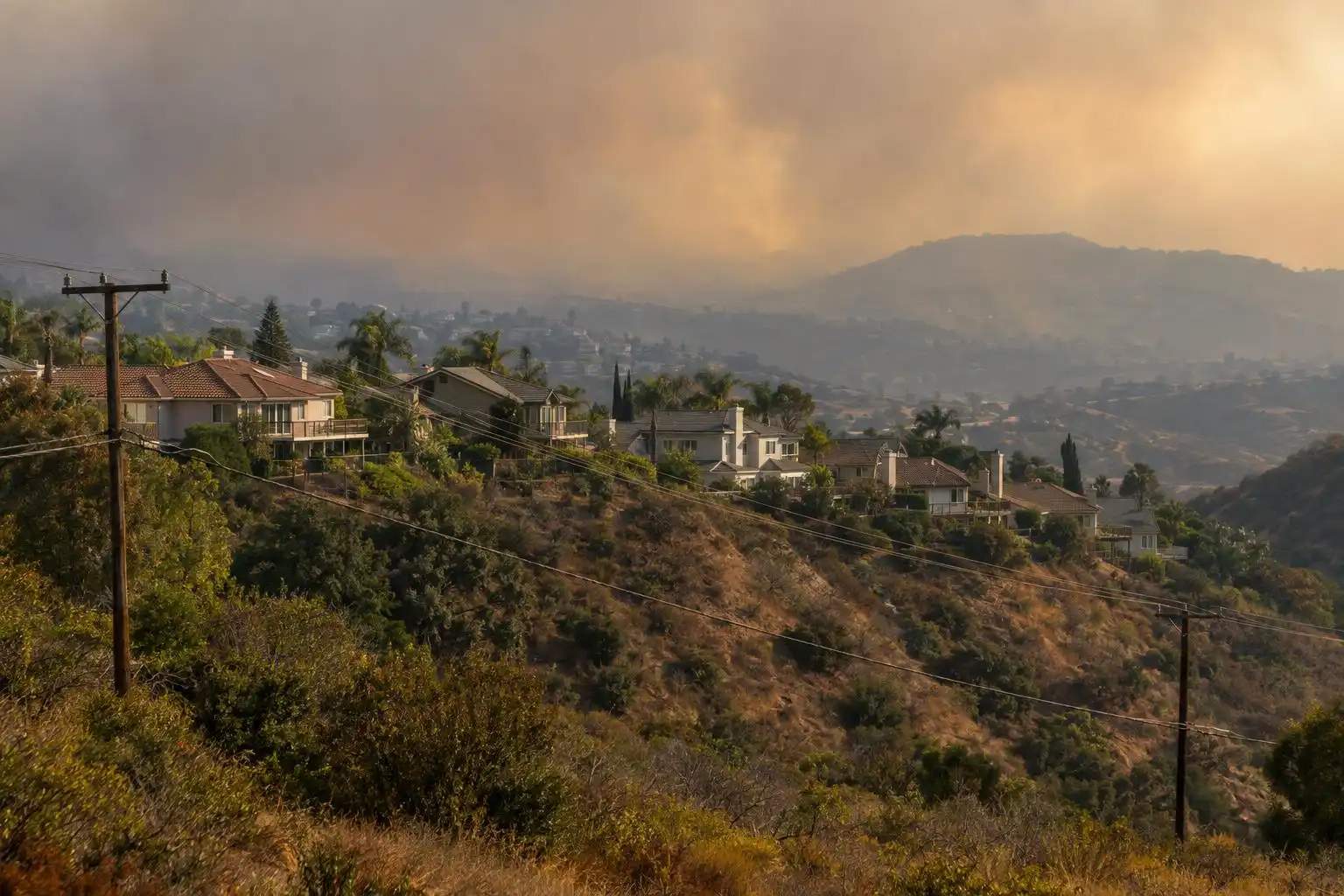

A utility cuts power to reduce the chance of a spark. A family packs because a fire is moving toward its neighborhood. Months after another fire, residents are still dealing with what settled in the ash. These are different stages of the same emergency, and each carries costs that a fire-suppression budget alone cannot cover.
This week’s fires in Southern California make the first stage plain. Hot, windy weather fueled brush fires, including a blaze that prompted evacuation orders and warnings around Malibu. Utilities shut off electricity to tens of thousands of people across the state as fire danger rose.[1] Turning off power can reduce one ignition risk. It also transfers an immediate burden to households, businesses and public services.
A shutoff needs its own response plan
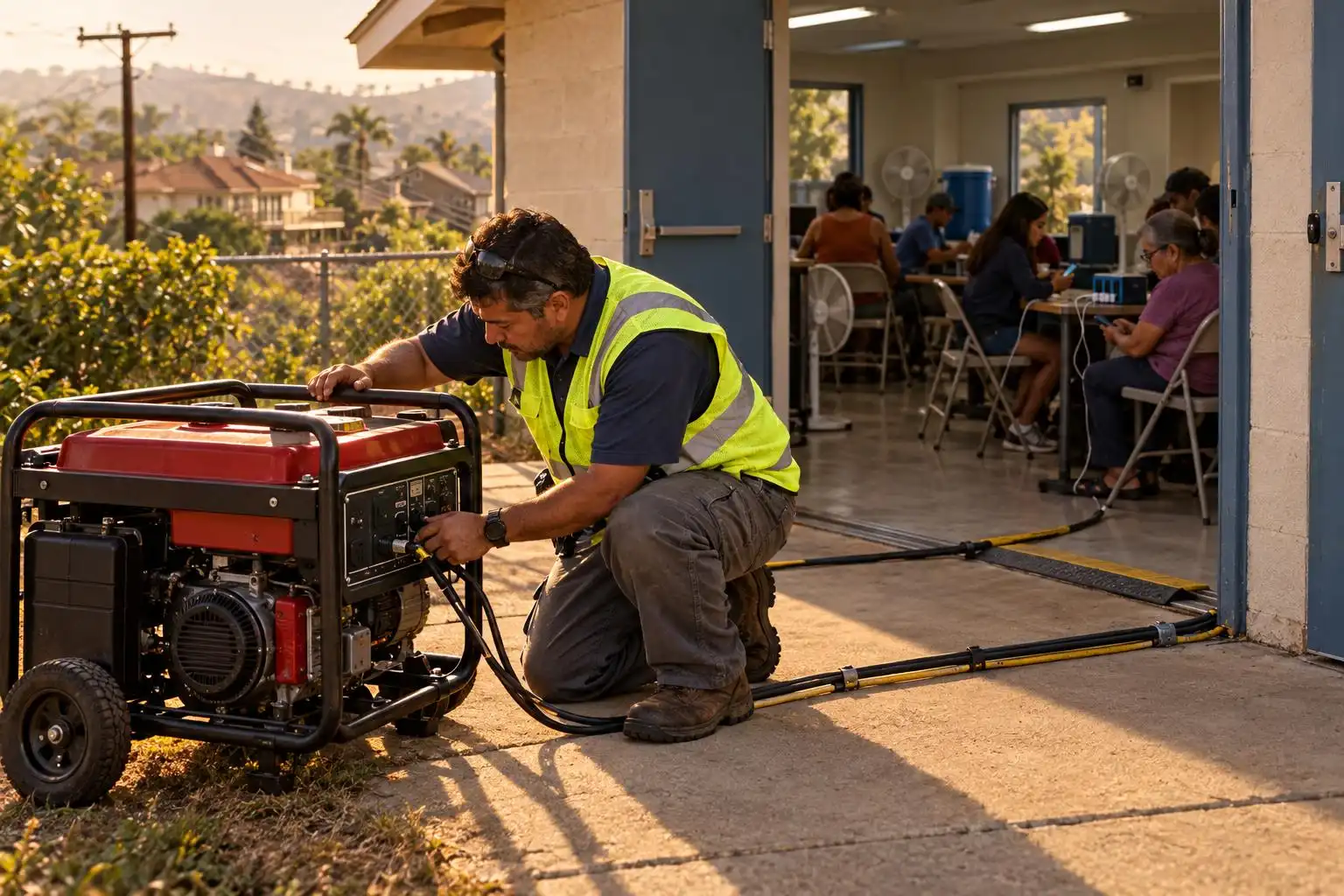
A public-safety power shutoff is not simply a notice on a utility website. It can disable refrigeration, communications, air conditioning and electrically powered medical equipment. A county that relies on shutoffs to manage fire risk needs to know which facilities can operate without grid power, for how long, and who will check on residents who cannot safely wait for restoration.
The useful question for a local emergency manager is not whether a backup-power plan exists. It is whether someone has tested the generator under load, paid for fuel, identified a place where people can charge devices and assigned staff to keep that place open. Those details determine whether a risk-reduction measure remains protective when conditions deteriorate.
Shutoffs also do not replace work around the ignition and the home. Maintaining equipment, reducing hazardous vegetation where treatment can help and strengthening buildings against embers all address different parts of the risk. None is a universal fix. Together, they give a community more than one chance to keep a dangerous day from becoming a disaster.
Evacuation capacity has to be built in advance
The pressure is not confined to California. Colombian authorities declared a public calamity as a wildfire burned near Villa de Leyva, forcing evacuations. The country’s disaster management agency reported multiple active fires, while dry conditions increased concern about fire spread as Colombia prepared for El Niño’s effects.[5] Different landscapes and institutions face the same operational problem: once a fire threatens homes, there is little time to invent an evacuation system.
An evacuation order only works if people receive it, understand where to go and have a way to leave. Local governments should test alerts in the languages residents use, map routes that remain viable under fire conditions and arrange transport for people without cars. Shelter plans need to account for those who cannot easily leave work, care responsibilities or animals behind.
That preparation costs money every year, even in years when no major fire reaches town. It pays for staff time, drills, agreements with transport providers and accessible shelter space. Calling those expenses optional because the fire has not yet arrived is one way to ensure that evacuation depends on luck.
Recovery includes what residents breathe
The end of visible flames is not the end of exposure. A study of 1,400 adults near the 2023 Maui wildfires found elevated internal levels of metals associated with poorer respiratory health up to a year and a half after the fires.[8] The findings do not mean every person near a wildfire faces the same exposure. They do make it harder to treat cleanup and health follow-up as a brief appendix to the response.
When buildings burn, the resulting debris is not just vegetation ash. Recovery agencies need clear guidance about cleanup, protective equipment and when residents can safely reenter damaged areas. Health systems need a way to reach people whose symptoms persist after the emergency clinics close. Tracking those needs requires sustained staffing and funding, not only an initial announcement of assistance.
Recovery also has a practical sequencing problem: people cannot repair homes or reopen businesses safely if debris and exposure questions remain unresolved. A credible recovery budget therefore has to cover assessment, cleanup and communication alongside reconstruction. Counting rebuilt structures while ignoring the conditions people return to gives an incomplete account of recovery.
The question of who pays is getting harder to avoid
Boulder County is among the U.S. jurisdictions suing oil and gas companies to help pay for damage from disasters linked to climate change. The Supreme Court is set to hear a case involving the county and a devastating Colorado wildfire, with potential consequences for similar litigation.[7] The legal questions matter, but a lawsuit is not a line item a fire chief or public-health department can spend today. Its outcome and any eventual payment remain uncertain.
Communities must make nearer-term choices: which projects get recurring funds, which risks remain with residents and which agencies are accountable for delivery. A grant can start a fuel-treatment project; it does not automatically maintain that work. A purchased generator is useful only with a tested operating plan. Those are less dramatic decisions than a court case or an evacuation, but they shape what happens during both.
The wildfire bill arrives in installments: prevention before a windy day, transport and backup power during it, and cleanup and health support afterward. Governments that budget only for the flames will keep discovering the rest of the cost in an emergency. The workable alternative is a funded plan that names the people, equipment and recurring expenses needed at every stage.
References
- Hot, windy weather stoke brush fires spark in Southern California, power turned off for many – AP News — https://apnews.com/article/california-santa-ana-winds-fire-risk-9356828fc52bf1f1c76c9b0f7a2fa1a3
- Colombia declares a public calamity as a wildfire rips toward Villa de Leyva – AP News — https://apnews.com/article/wildfire-colombia-ecuador-el-nino-forest-fires-8a280acc2c50b1877766dcc3a7f3d6b8
- The Supreme Court will hear a major climate change case involving a devastating Colorado wildfire – AP News — https://apnews.com/article/supreme-court-climate-change-wildfires-natural-disasters-688e1297b3c683b2a0e210850d1dd185
- Residents near Maui wildfires show elevated metals linked to impacted lung health, study says – AP News — https://apnews.com/article/climate-hawaii-maui-wildfires-human-health-c7ea730977c8e11aece702a58ab1d898


Leave a Reply
You must be logged in to post a comment.