
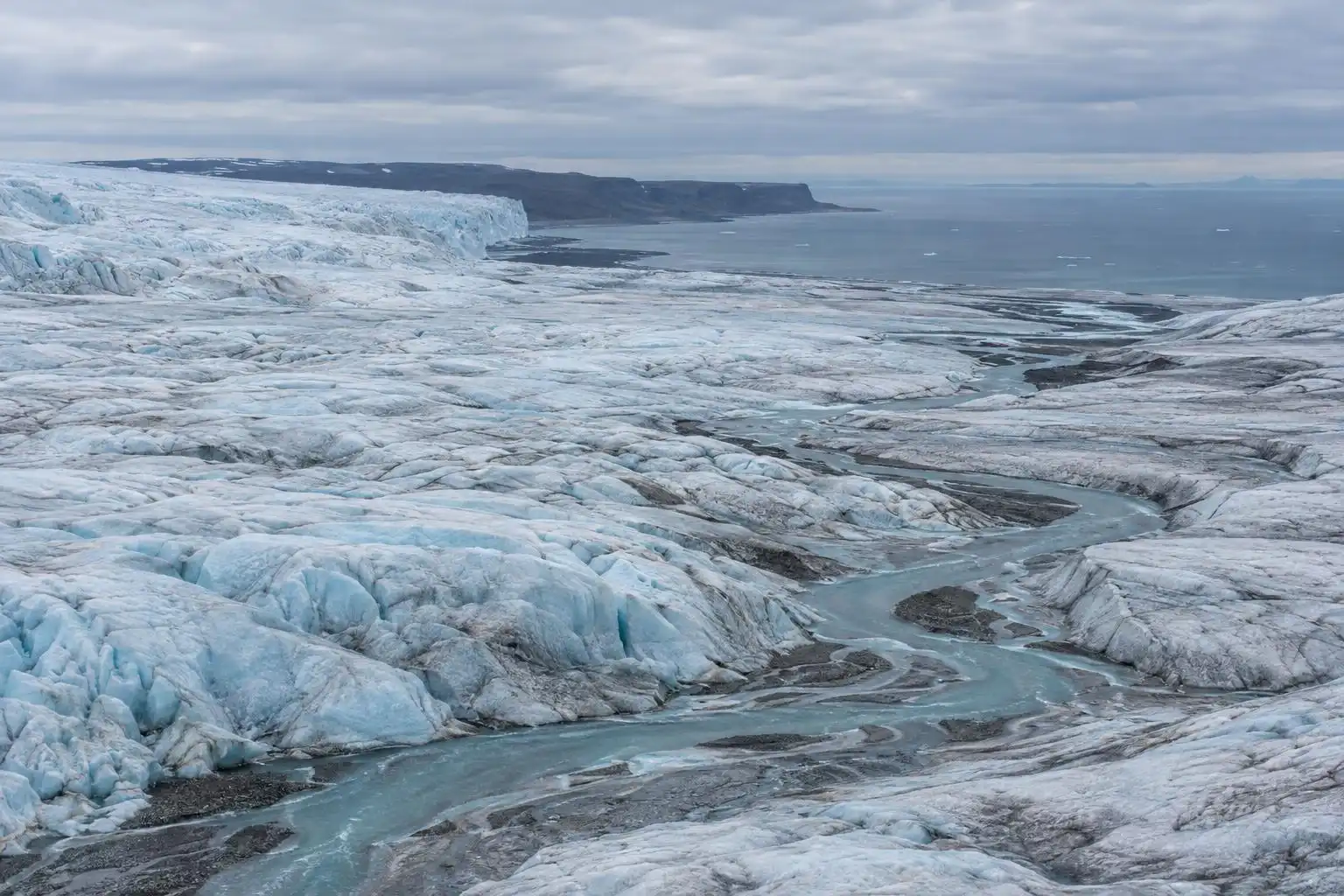

At a drilling camp, a warm day can feel deceptively immediate. Water runs along the surface, finds a crack, and disappears into the ice. By evening the air has cooled again. The runoff has stopped, but the ice sheet has not returned to its morning state: some of that water has escaped to the sea, and the next warm day begins from a slightly different place.
That difference between a temporary temperature and a lasting change is central to the future of sea level. Ice sheets respond over centuries and millennia as well as seasons. To understand what warming can set in motion, we have to look beyond the next few decades—and into shorelines left by earlier warm periods.
A shoreline is a record, not a forecast
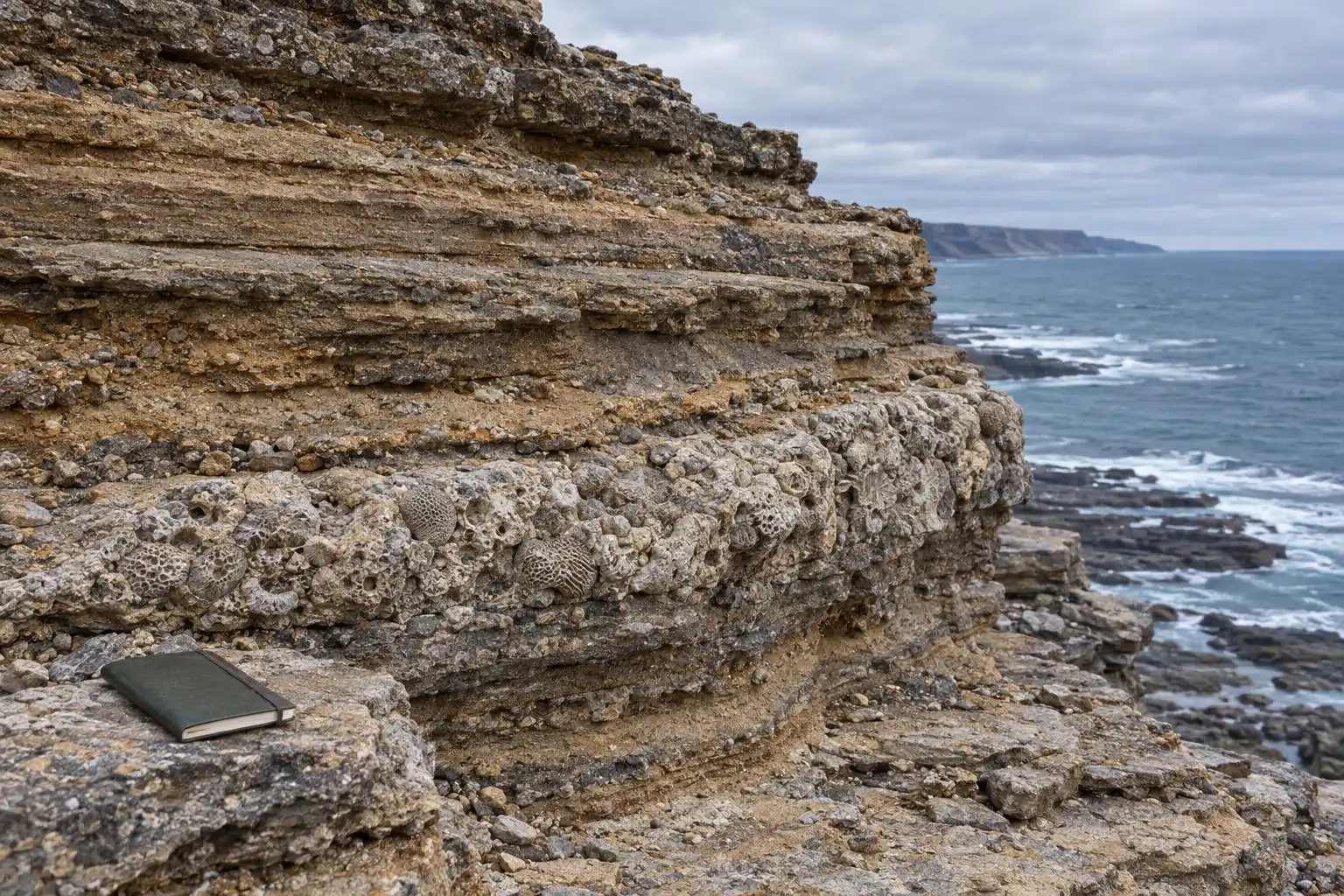
During the last interglacial, roughly 129,000 to 116,000 years ago, global sea level stood several metres higher than it does today. The IPCC’s Sixth Assessment Report assesses the peak as about 5 to 10 metres above present level. Global temperatures were probably around 0.5°C to 1.5°C warmer than the 1850–1900 average, though conditions differed greatly by region and season.
We find traces of that sea in fossil reefs, coastal deposits and old shorelines. None is a simple ruler. Land can rise after losing the weight of ice or sink for other reasons, so a beach now several metres above the water does not, by itself, tell us the height of the ancient ocean. Researchers combine sites and account for those movements to reconstruct global sea level.
The result is a constraint, not a timetable. The last interglacial had different sunlight patterns and a long time in which ice sheets could respond. Its high water tells us that a warmer world can hold much less land ice. It does not tell us that the same rise will arrive this century.
Why the ice keeps changing after the air cools
An ice sheet is not a block that melts evenly from the top. Snow accumulates inland and gradually becomes ice. Under its own weight, that ice flows toward the margins, where it melts or breaks into icebergs. Change the balance between snowfall and losses, and the sheet begins to adjust—but moving the enormous body of ice takes time.
In Greenland, surface melt removes ice directly. A lower, darker ice surface can then absorb more sunlight and experience warmer air, making further loss more likely. Around Antarctica, ocean water can erode floating ice shelves from below. Those shelves do not themselves add much to sea level when they melt, but they can slow the flow of grounded ice behind them. Thin a shelf, and that restraint may weaken.
These processes do not all run at one speed. Some glaciers accelerate within years; the full adjustment of an ice sheet can take thousands. Nor is every loss irreversible. The difficulty is that rebuilding a diminished ice sheet requires snow to accumulate and remain frozen over an immense area for a very long time. Cooling the air does not instantly put discharged ice back on land.
What “committed” sea-level rise means
Scientists sometimes describe part of future sea-level rise as committed: a long-term response to warming that has already occurred or to a temperature we choose to sustain. The word can sound like a prediction for a particular year. It is not. It describes a consequence unfolding over time, with its size and pace dependent on what happens next.
The IPCC estimates that, over the next 2,000 years, global mean sea level would rise by about 2 to 3 metres if warming were limited to 1.5°C, and about 2 to 6 metres if limited to 2°C. Those ranges include more than ice-sheet loss; warming ocean water expands, and mountain glaciers contribute too. They are long-term estimates, not projections of where the sea will stand in 2100.
A brief overshoot of a temperature threshold is also not identical to holding that temperature for centuries. Duration matters to an ice sheet. So does the path taken: whether warming continues, stabilizes or reverses will affect how much ice is lost before the climate cools. Some ice-sheet changes may become self-sustaining, but the temperatures and timescales of such thresholds remain uncertain.
The past tells us what is possible—and what it cannot settle
The ancient sea-level record gives us a useful reality check. Several metres of rise are physically plausible in a warmer climate because they happened before. But that record cannot neatly divide every metre between Greenland and Antarctica. Ice-core evidence, geological deposits and models help narrow the possibilities, while leaving important uncertainties about how each ice sheet behaved.
Modern measurements answer a different question. Satellites track changes in ice mass and the height of the sea now; field observations reveal how meltwater and ocean heat reach particular glaciers. These observations tell us the process is underway. The older record shows why stopping a short-term acceleration would not necessarily end the longer adjustment.
Both kinds of evidence matter. It would be a mistake to use an ancient high shoreline as a deadline for coastal communities. It would be just as mistaken to assume that a century-scale projection captures the whole consequence of the warming that century produces.
The choice hidden inside a long timescale
On an ice sheet, the day’s weather is obvious. The centuries ahead are harder to picture. Yet a slow response is not a reason to postpone decisions; it means that decisions made while the ice still looks familiar can shape coastlines far beyond our lifetimes.
Reducing warming limits the pressure on ice sheets and the amount of long-term sea-level rise we set in motion. Preparing for the rise already underway remains necessary. The lesson of deep time is neither that every ancient shoreline is our destination nor that ice will wait for us. It is that an ice sheet can remember warmth long after the warm day has passed.



Leave a Reply
You must be logged in to post a comment.