
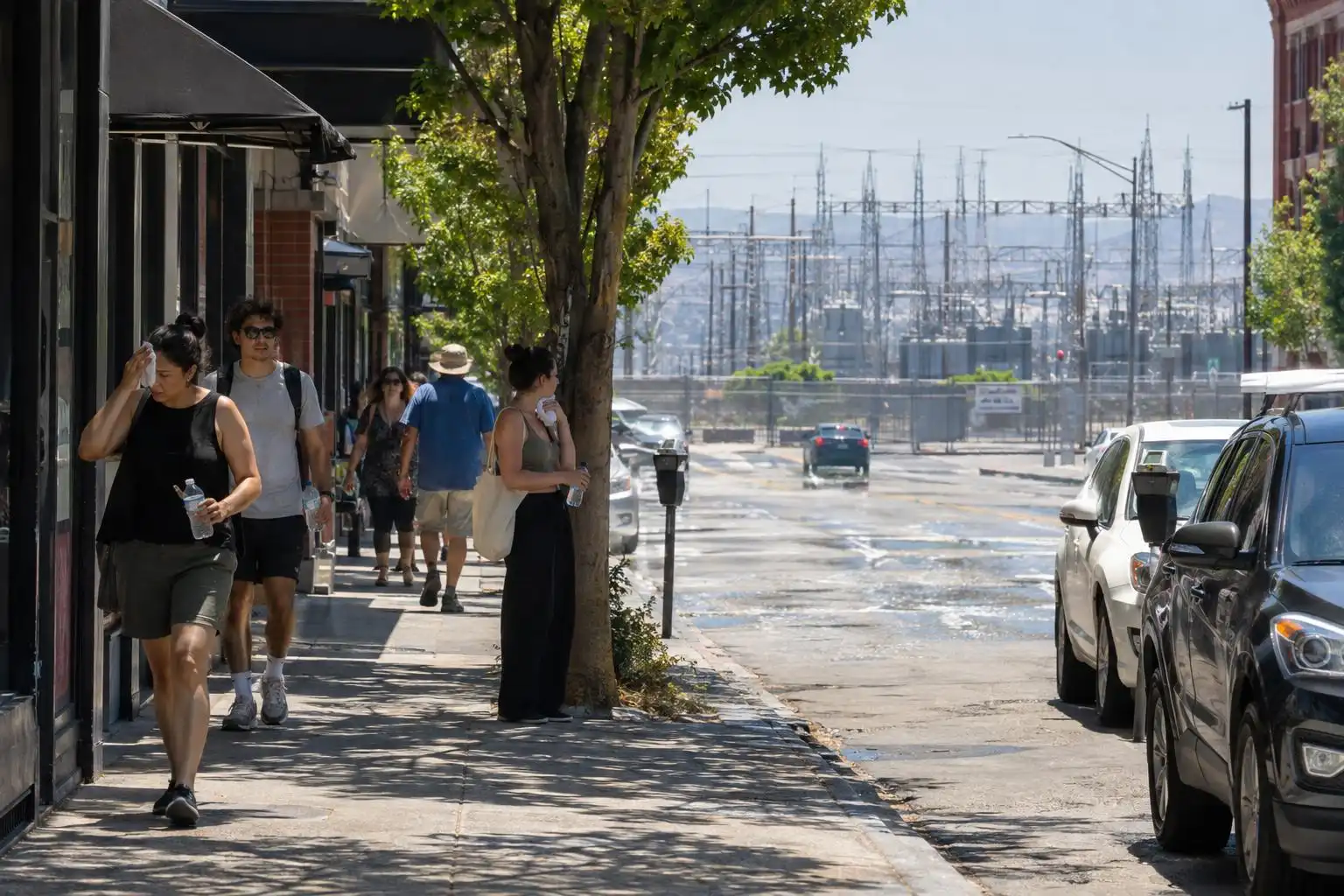

A heatwave does not have to set a record to cause trouble. It can arrive before cooling centers open for the season, before households expect to use air conditioning, or while electricity networks are already under strain. The temperature matters. So does the timing.
A new study of heatwaves over land finds trends toward earlier starts, later endings and longer seasons across much of the globe.[3] That changes the question we should ask after an extreme heat event. It is not only whether climate change made the hottest day hotter. It is also whether warming has widened the part of the calendar in which dangerous heat can occur.
A changing season is not the same everywhere
The study reports trends toward earlier heatwave onset over 72.0% of global land, later endings over 79.6%, and longer heatwave seasons over 92.1%. Those are large areas, but a trend is not automatically a statistically clear one. The corresponding shares with statistically significant trends are smaller: 13.4%, 20.3% and 34.4%.[3]
Both sets of numbers matter. The first describes how widespread the estimated changes are; the second indicates where the evidence is strong enough to distinguish a trend more confidently from variability. Neither means every town will experience its next heatwave early. Heatwaves still depend on weather patterns, and their local timing will vary from year to year.
The practical consequence is a longer window of exposure. A community that once concentrated its heat preparations in a familiar peak-summer period may need to be ready sooner and remain ready later. That is a different planning problem from simply preparing for a higher maximum temperature.
The first hot days can stress the power system
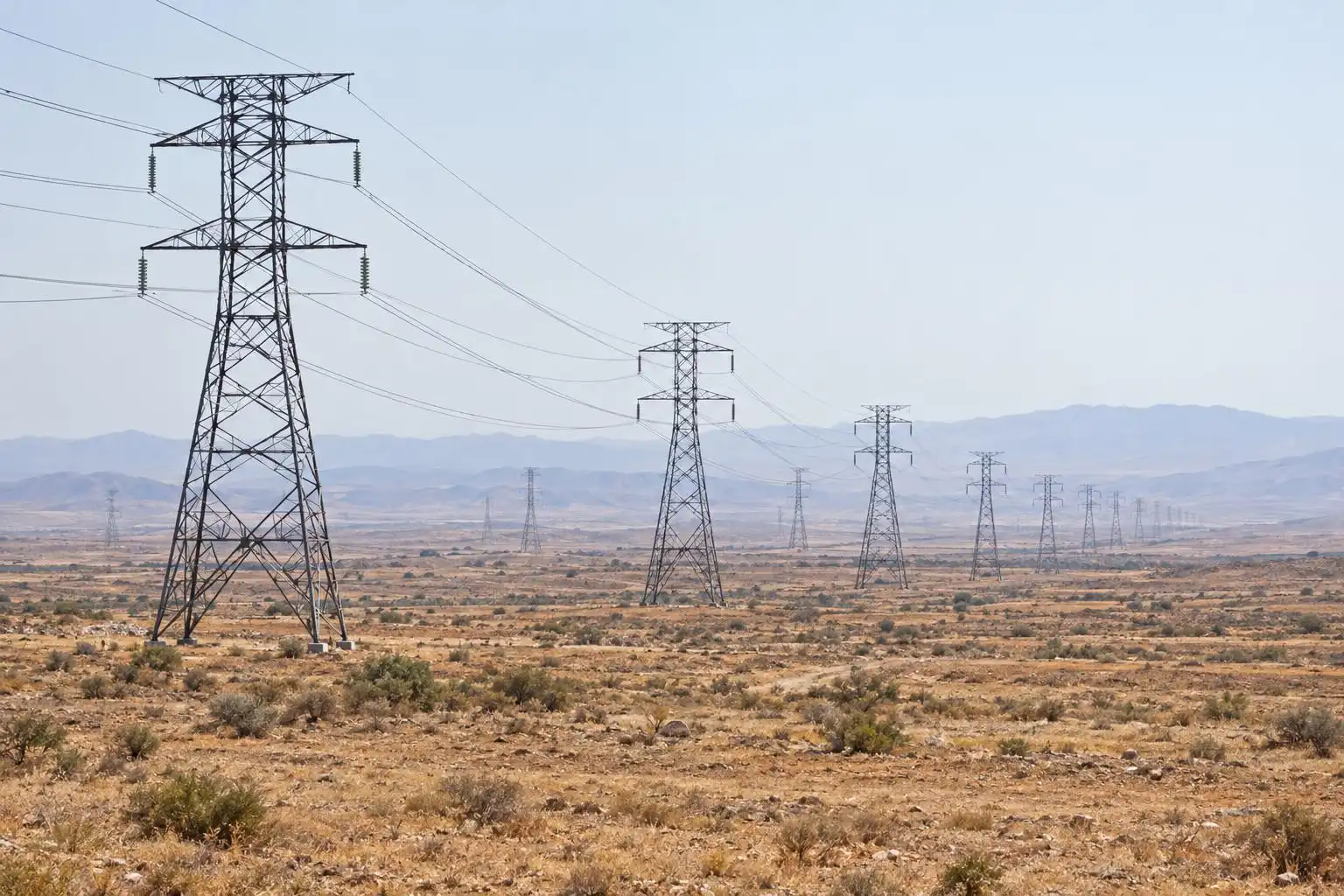
Heat raises electricity demand as people try to cool buildings. It can also constrain supply and transmission: generators may lose output in hot conditions, while power lines have temperature-dependent limits. A recent modeling study brought those interactions together for the Western European grid, testing hundreds of projected heatwave scenarios for 2026–2030.[5]
Its results were not uniform. Across the grid configurations represented, the Spanish system showed temperature-induced bottlenecks and load shedding, while the German system was comparatively resilient.[5] This is a modeled assessment, not a forecast that a particular Spanish heatwave will cause an outage. It does show why a regional temperature projection alone cannot tell an operator where the network is most vulnerable.
An earlier heatwave could matter operationally if it arrives before seasonal maintenance and emergency plans are complete, or if it catches customers before they have prepared for sustained cooling. Those are plausible risks, not outcomes established by the grid study. The point is to test them against local infrastructure and demand data rather than assume that every place responds to heat in the same way.
From a global signal to a local decision
Climate models describe large-scale changes more readily than the conditions at a particular substation, hospital or neighborhood. That resolution gap is a central problem for regional risk assessment. Recent work on probabilistic machine learning aims to represent how extremes evolve together across space and time, including heatwaves and tropical cyclones.[4]
Better regional estimates can help planners ask more useful questions: how long might a hot spell last, how many places might be affected at once, and what range of outcomes should a system withstand? But a more detailed model is not a substitute for checking its performance or for knowing who and what is exposed. A heatwave becomes a disaster through the interaction of weather, infrastructure and vulnerability.
Attribution science has a narrower task. For a defined event, it compares its likelihood or intensity in today’s climate with an estimate of a climate without human-caused warming. A study of heatwave-season trends supplies important context, but it cannot, by itself, quantify climate change’s contribution to every individual hot spell. That requires an event-specific analysis and a clear definition of the event being tested.
Experience does not automatically change minds
There is also a gap between experiencing extreme weather and acting on it. Research published in Nature Climate Change reports that people’s subjective experience—and whether they attribute an extreme event to climate change—are associated with climate-related attention and choices more strongly than objective exposure alone.[1] An association does not prove that a particular explanation will change someone’s view.
For communicators, that is a reason for precision rather than persuasion by disaster. Say what the evidence supports: heatwave seasons are lengthening across substantial areas; local risks differ; and the influence of warming on a particular event needs its own assessment. Overclaiming certainty can obscure the practical finding that matters most: preparations should not depend on heat arriving on its old schedule.
Prepare for the window, not just the peak
The useful response is to revisit seasonal assumptions. Heat-health alerts, cooling access, worker protections and grid contingency plans need dates that reflect current risk, not only historical averages. Local records can help identify when dangerous heat has begun in the past; projections can test whether those dates remain adequate.
We cannot predict the calendar date of a community’s next severe heatwave from a global trend. We can say that treating heat as a brief, fixed summer season is becoming harder to justify. In a warming climate, readiness has to begin before the familiar peak—and last beyond it.
References
- Earlier and faster heatwave onset on land under a warming climate — https://www.nature.com/articles/s41558-026-02762-2
- Heatwave-induced capacity bottlenecks in European electricity grids — https://www.nature.com/articles/s41560-026-02151-1
- Regional climate risk assessment from climate models using probabilistic machine learning — https://www.nature.com/articles/s42256-026-01308-7
- Climate choices and attention are shaped more by politics than weather — https://www.nature.com/articles/s41558-026-02775-x


Leave a Reply
You must be logged in to post a comment.